Making the Case: Ivar Stenberg
Think the Rangers don't need another winger? Think again. Ivar Stenberg might be the best player in the entire draft.

If you haven’t heard of Sweden’s top prospect, Ivar Stenberg, the sarcastic reaction and concern about the New York Rangers potentially drafting another winger at the top of the draft could be considered valid. But I’m here to tell you that you’d be wrong.
Ivar Stenberg needs no introduction. He’s the top-ranked European skater for a reason. He’s had a prolific draft year, and his high level of play has earned him comparisons to some of the most elite names to come out of Europe.
Player Information
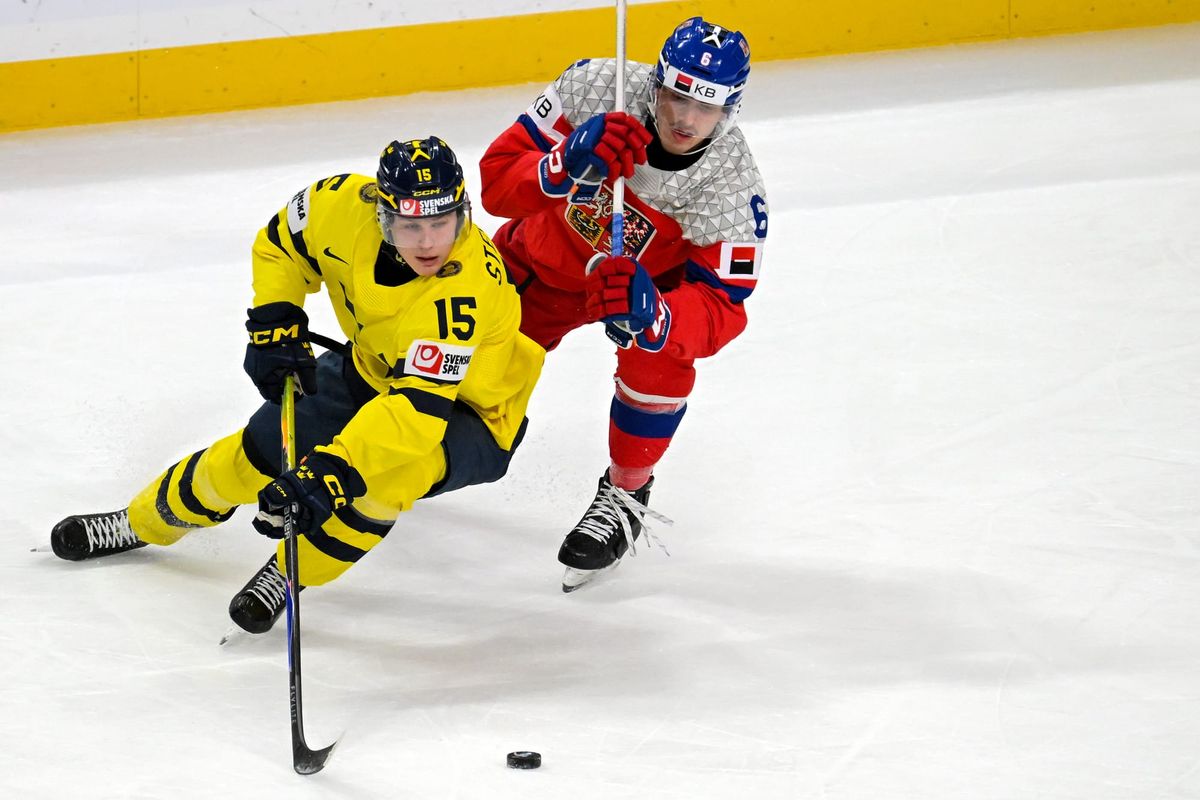
It’s rare to find a forward who can impact the game the way Stenberg does without playing center. The swift-skating winger uses his edges to corral and control the puck with ease, goading opposing players into falling for his feints as he uses his excellent, agile edge work to outmaneuver and outpace other teams, either beating them wide or using his fancy stick work to cut through the middle. We’ve seen it on multiple stages now, whether dominating at the World Junior Championship or in the SHL. Stenberg, regardless of the side he lines up on, is a threat with and without the puck.
Ivar, the younger brother of 2023 St. Louis Blues first round pick Otto Stenberg, has proven wherever he’s gone that he is among the best in his draft class. For much of the year, several prospect analysts ranked him ahead of Gavin McKenna, as the top two forwards traded the top spot back and forth.
In 2024-25, Stenberg torched the J20 division for 26 goals and 53 points in 27 games, earning a call-up to Frolunda’s top team, where he continued to perform, scoring three goals in the postseason, joining the elite company of Rasmus Dahlin and Victor Hedman as the only players to do so in the postseason prior to their draft year.
In his actual draft year, he picked up where he left off, starting on Frolunda’s top team and never looking back. Throughout the first half of the season, he was averaging a point per game and threatening to overtake Daniel Sedin’s best-ever draft year performance from 1998-99. Stenberg ended up cooling off a bit, but still posted an astounding 11 goals and 33 points in 43 games as an 18-year-old, which ranks among the best performances by a player in their draft year, outperforming the likes of Niklas Backstrom and, more recently, Leo Carlsson.
Stenberg would go on to help Frolunda win the Champions Hockey League tournament that the IIHF established, while also being named the Swedish Junior Hockey Player of the Year, again joining elite company, including our very own Henrik Lundqvist from way back in 2002.
While it can be argued it’s considerably more impressive for Stenberg to dominate a league of men in the SHL, he also helped his country win the gold medal at the World Junior Championship after scoring 10 points in seven games. But it was particularly the semifinal and final matchups against Finland and Czechia, respectively, where Stenberg came up big for Sweden. He took over for long stretches in both games, scoring two goals and adding three assists in Sweden’s two most important matches of the tournament, showcasing his offensive prowess and dynamic toolset.
Ivar Stenberg 4 Goals, 6 Assists (10 Points) in 7 Games at 2026 IIHF World Junior Championship.pic.twitter.com/j0aRIM1R4X
— Hockey Performances (@PerformancesNHL) May 25, 2026