MTPS: Unlike a Doughnut, Jeff Gorton's Rangers History Is Not Better When Glazed
Chris Drury has made his fair share of mistakes, but can we stop pretending that the Jeff Gorton era was so great?
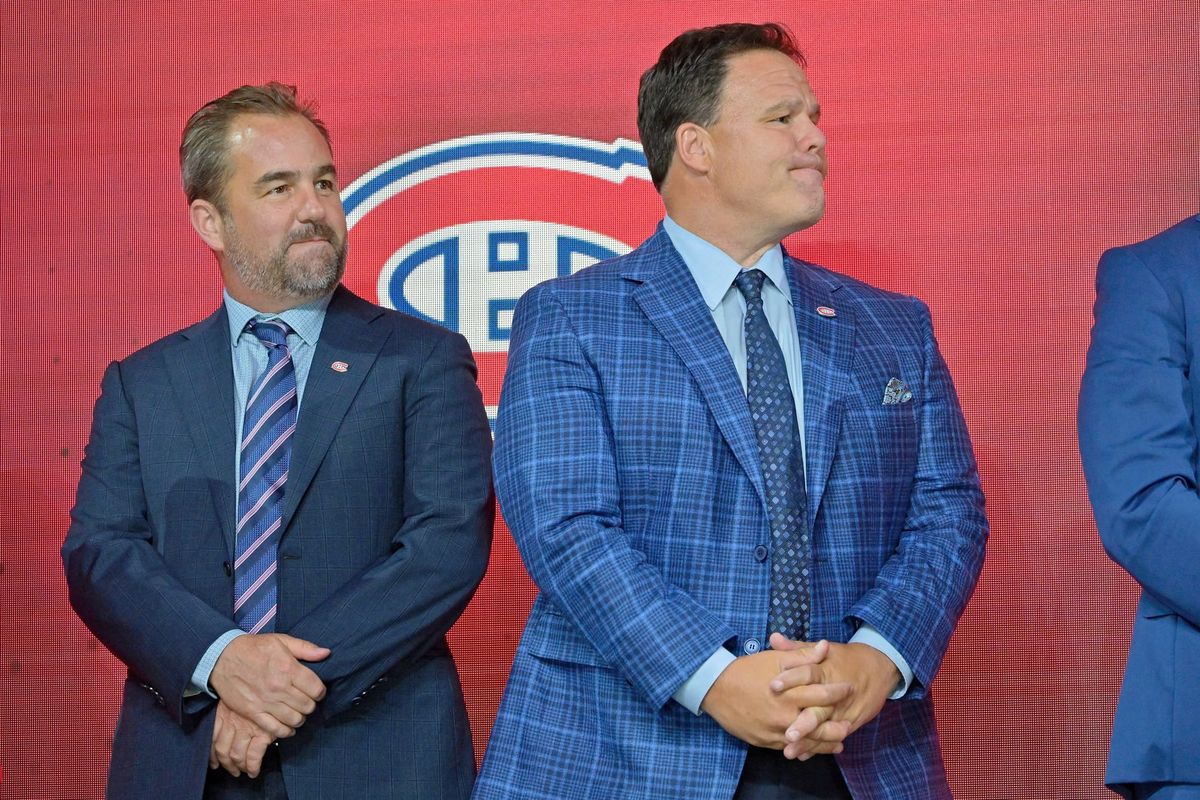
I've been really thinking about how to respond to this article from The Athletic's Vince Mercogliano for a while now:
Today marks 5 years since the #NYR fired John Davidson and Jeff Gorton, then promptly promoted Chris Drury.
— Vince Z. Mercogliano (@vzmercogliano) May 5, 2026
Here's a deeper look at those stunning decisions and how they set multiple franchises on diverging paths 👇 https://t.co/X9DIaLh5ik
The best, most mature, and comprehensive response I have come up with is this.
Need me to go more in depth? OK.
Look, I get it. I really do. The Montreal Canadiens are seemingly on their way to the Eastern Conference Final with a fun, young team built through the draft and player development, while the Rangers are not. The simple extrapolation from that is that, had the Rangers not fired Jeff Gorton, of course they would be every bit as young, exciting, and ascendant as the Canadiens, because of Jeff Gorton.
Except, no, it doesn't work that way.
Vince's article paints a picture that is decidedly one-sided, showering Gorton with praise, leading the reader to believe that had James Dolan not grown impatient and fired Gorton, the Rangers would be right where Montreal is now, stating,
[H]is Montreal success suggests the formula works if given enough time.
But a deeper dive shows that—while Chris Drury owns a good portion of where the Rangers are now—so does Jeff Gorton.
Draft Picks, Trades, and Firings
The article talks about the savvy moves that Jeff Gorton's Montreal Canadiens made in the draft and in using trades to bring in additional picks and young players like Alex Newhook, Noah Dobson, and Kirby Dach. These were great moves, and there's no debating that. I would even throw in the deal to acquire Zachary Bolduc, which has not yet worked out but was a smart deal, never the less.
The problem is that none of that savvy was on display when Gorton was here.
Let's start with the draft picks. We all know about how the four straight lottery picks (Lias Andersson, Vitali Kravtsov, Kaapo Kakko, and Alexis Lafrenière) worked out—or didn't work out—but let's look even deeper.
In his column, Mercogliano notes that,
There were a few initial firings after Drury’s promotion — notably director of European scouting Nick Bobrov — but a more thorough scouting transformation came months later. Gordie Clark, the longtime director of amateur scouting, did not have his contract renewed after being demoted the year prior, with director of North American scouting Chris Morehouse also leaving after the 2021 draft. Drury went on to keep three amateur scouts from the Gorton years while letting seven others go. Conversely, he retained four of the five European scouts who had been in place under Bobrov...
...The ousters of longtime staffers such as Ramsay have produced a chilling effect inside the organization.
Putting Ramsay aside for a minute, let's take a look at the drafts run by Gorton, Clarke and Bobrov between 2015 and 2020:
2015
Ryan Gropp - Round 2
Robin Kovacs - Round 3
Sergei Zborovsky - Round 3
Aleksei Saarela - Round 3
Brad Morrison - Round 4
Daniel Bernhardt - Round 4
Adam Huska - Round 7
2016
Sean Day - Round 3
Tarmo Reunanen - Round 4
Tim Gettinger - Round 5
Gabriel Fontaine - Round 6
Tyler Wall - Round 6
Ty Ronning - Round 7
2017
Lias Andersson - Round 1
Filip Chytil - Round 1
Brandon Crawley - Round 4
Calle Själin - Round 5
Domenick Lakatos - Round 6
Morgan Barron - Round 6
Patrik Virta - Round 7
2018
Vitali Kravtzov - Round 1
K'Andre Miller - Round 1
Nils Lundqvist - Round 1
Olof Lindblom - Round 2
Jakob Ragnarsson - Round 3
Joey Keane - Round 3
Nico Gross - Round 4
Lauri Pajuniemi - Round 5
Simon Kjellberg - Round 6
Riley Hughes - Round 7
2019
Kaapo Kakko - Round 1
Matthew Robertson - Round 2
Karl Henriksson - Round 2
Zac Jones - Round 3
Hunter Skinner - Round 4
Leevi Aaltonen - Round 5
Adam Edstrom - Round 6
Eric Ciccolini - Round 7
2020
Alexis Lafrenière - Round 1
Braden Schneider - Round 1
Will Cuylle - Round 2
Oliver Tarnstrom - Round 3
Dylan Garand - Round 4
Evan Veirling - Round 5
Brett Berard - Round 5
Matt Rempe - Round 6
Hugo Ollas - Round 7
(*Players in bold played at least one game for the New York Rangers.)
In raw numbers, that's 47 players, of which only 17 (36 percent) ever suited up for the Rangers. If you remove the eight first rounders, the 39 picks in rounds two through seven have yielded nine players who played for the Rangers (23 percent). In terms of impact, you're talking really about Lafrenière, Cuylle, Chytil, and Miller as the only four players on that list who even potentially qualify, right? That's, um, not good.
Because Vince mentions Morehouse, let's add in the 2021 draft:
Brennan Othmann - Round 1
Jayden Grubbe - Round 3
Ryder Korczak - Round 3
Brody Lamb - Round 4
Kalle Väisänen - Round 4
Talyn Boyko - Round 4
Jaroslav Chmelar - Round 5
Hank Kampf - Round 7
Find me the Juraj Slafkovsky- or Ivan Demidov-type of impact first round pick. Find me the Lane Hutson kind of mid-round sleeper. You can't, because those picks didn't happen when Gorton, Clarke, and Bobrov were running the Rangers.
Can anyone argue, after looking at those years of ineptitude that firing Clarke, Bobrov, Morehouse, and most of the scouts who worked for the team was not deserved?
It would have been nice if Mercogliano had provided that bit of context instead of making it seem like Drury came in and fired loyal soldiers who were good at their jobs just to sew chaos and doubt within the organization. He fired people who, based on the results, clearly deserved to be fired.
With that being the case, while none of us are privy to what went on behind the scenes and led to Jim Ramsay being dismissed, the precedent set by Drury's dismissal of the scouting team certainly suggests that there was probably justification for that as well.
Trades
The trade of Pavel Buchnevich for Sammy Blais and a second round pick will forever be a stain on Chris Drury's record. And it should be. But overall, was Gorton's record with the Rangers—specifically during their retool period—really any better?
Derick Brassard and a seventh round pick for Mika Zibanejad and a second round pick will go down as one of the greatest trades that any New York Rangers GM has ever made. It was a steal. And we must give Gorton credit for getting Adam Fox for a pair of second round picks, as well. But if we're specifically responding to Vince's allegation that the Rangers are worse off now because of Drury? Well, again, like with the drafting and firing, there's some nuance there.
After the Letter
Once the Rangers committed to a rebuild/retool, Jeff Gorton shipped out the following players:
- Rick Nash
- J.T. Miller
- Ryan McDonagh
- Mats Zuccarello
- Kevin Hayes
- Derek Stepan
- Antti Raanta
Coming to the Rangers were:
- Tony DeAngelo
- Ryan Spooner
- Ryan Lindgren
- Matt Beleskey
- Vladislav Namestnikov
- Brett Howden
- Libor Hajek
- Brenden Lemieux
- Several draft picks
The Rangers used the picks from the Arizona Coyotes (Stepan) and Boston Bruins (Nash) on Lias Andersson and K'Andre Miller.
The first and second round picks that the Rangers received from the Tampa Bay Lightning for Ryan McDonagh and J.T. Miller were used on Nils Lundqvist and Karl Henriksson.
The first rounder they acquired from the Winnipeg Jets for Kevin Hayes went back to Winnipeg in the Jacob Trouba deal along with Neal Pionk.
The second and third rounders that the Rangers received from the Dallas Stars for Mats Zucarello turned into Matthew Robertson and Oliver Tarnstrom.
Again, much like with the drafting, you're not talking about a great bit of work here.
Gorton targeted Vladislav Namestnikov thinking he would be a great scoring winger for the New York Rangers. He did not take into account that Namestnikov's offense was, in large part, the result of playing on a line with Steven Stamkos and Nikita Kucherov. At the time of the trade, Namestnikov had accumulated 44 points (20 goals) in 62 games that season. In 99 subsequent games for the Rangers Namestnikov would go on to total 35 points (13 goals). That's not to say that Namestnikov was a bad player. He wasn't. He just wasn't that kind of a scorer. What he was, and what he still is, was a very solid depth player who could give a team coverage at any forward spot and really play in any situation.
Gorton didn't see the value in that, though, and eventually dealt him to the Ottawa Senators for a fourth round pick and minor league defenseman Nick Ebert. And while Namestnikov went on to provide depth value for teams like the Detroit Red Wings, Colorado Avalanche, Dallas Stars, and Winnipeg Jets for the next seven years (and counting), the New York Rangers spent actual dollars under Gorton on players like Colin Blackwell and Kevin Rooney to fill the same role, only worse.
Ryan Spooner, who came over from Boston in the Nash deal, had more success out of the gate. He recorded 16 points (four goals) in 20 games following the trade to New York. The following season he started slowly and Gorton wasted no time sending him to the Edmonton Oilers for Ryan Strome—a tidy bit of work by Gorton's there.
When all is said and done, though, even if you want to include Ryan Strome in this grouping, if you trade away as much talent as Gorton did and come away with just Ryan Strome and Ryan Lindgren to show for it, that's not good.
The End of the Rebuild and More Moves
Jeff Gorton sent out his rebuild letter in February of 2018.
In May of 2018, the Rangers hired Boston University's David Quinn to be the team's head coach. Both Gorton and owner James Dolan specifically cited Quinn's work at developing young talent as one of the major reasons why he was the perfect fit for the job.
In June of 2019 the Rangers acquired Jacob Trouba from Winnipeg. A month later they signed Artemi Panarin to a seven year contract. The rebuild was officially over. Quinn, who had been hired to coach a young, developing team was now responsible for trying to get a team into contention. Young players like Lafrenière, Chytil, and Kakko were buried in favor of less talented veterans. The epitome of this was the decision to utilize Brendan Smith—a defenseman—as a forward ahead of some of their prospects.
Players who a rebuilding team should have been trading away, like Jesper Fast and Ryan Strome, were either allowed to leave as free agents for no compensation or extended. The Rangers would buy out Kevin Shattenkirk, whose tenure had not gone as planned due to injury, while giving the Detroit Red Wings a second round pick to take on the final years of Marc Staal's contract (Mercogliano doesn't mention this, but does ding Drury for doing the same thing to get out from under the Patrik Nemeth contract).
Tony DeAngleo, who came to the Rangers with a checkered reputation, was signed to an extension in October 2020, despite the presence of Adam Fox, Jacob Trouba, Nils Lundqvist, and, by that time, Braden Schneider. Six games into the season, after an off-ice altercation with teammates, Gorton suspended DeAngelo, waived him, and ultimately ate the contract.
Now, listen, DeAngelo is talented and was productive here—there's no question about that. As a defenseman he recorded 92 points (19 goals) in 167 games. But if you're one incident away from kicking the guy completely off the team, you don't extend him. You trade him before it blows up in your face.
The Bottom Line
Chris Drury's tenure as New York Rangers team president and general manager has not gone smoothly. There have been plenty of bumps. But if you want to give credit to Jeff Gorton for the good parts of the Rangers that Drury inherited, as Vince does, then you also have to acknowledge that he did a pretty awful job with his rebuild, and that is a huge part of why the Rangers find themselves right back in a similar position.
Yes, it's great that Gorton convinced James Dolan to let him rebuild the Rangers. But he rebuilt the Rangers badly. Gorton drafted 47 players—with four lottery picks in a row—and the very best that the Rangers have gotten from them are flashes of hope from Alexis Lafrenière. He traded away valuable assets and the best player he got back was Ryan Lindgren.
Yes, Chris Drury inherited Adam Fox and Mika Zibanejad from Jeff Gorton. He also inherited a coach who was woefully out of his depth, young players who had been rushed to the NHL only to be told they had to sit behind the likes of Gregg McKegg, Kevin Rooney, Colin Blackwell, Brendan Smith, Adam Cracknell, and Michael Haley, and a messy cap situation that included the contracts (complete with full no-movement clauses) of Chris Kreider and Jacob Trouba.
So, yeah, be happy for what Jeff Gorton has done with the Montreal Canadiens. It has worked out very well for him there. But that should not take away from the fact that he was, in many ways, a bad general manager during his tenure with the New York Rangers. And, based on what he actually did here, there is no reason to believe the organization would be better off had he stayed.
If you want to tell the story about the Rangers, and how they wound up here, then tell the whole story. Tell the whole story of the impacts of Sather, Gorton, Drury, and Dolan on this team. To do otherwise—to assert that if Gorton were allowed to continue to run the Rangers as he had been running them that the team would be in a better place—is to ignore what actually happened here under his watch.
It is to treat history like a doughnut, and history does not need glazing.