The Miracle on Ice: Its Impact on the New York Rangers and USA Hockey
From Lake Placid to Broadway, the Miracle on Ice helped redefine hockey in the United States and played a direct role in shaping Rangers history.

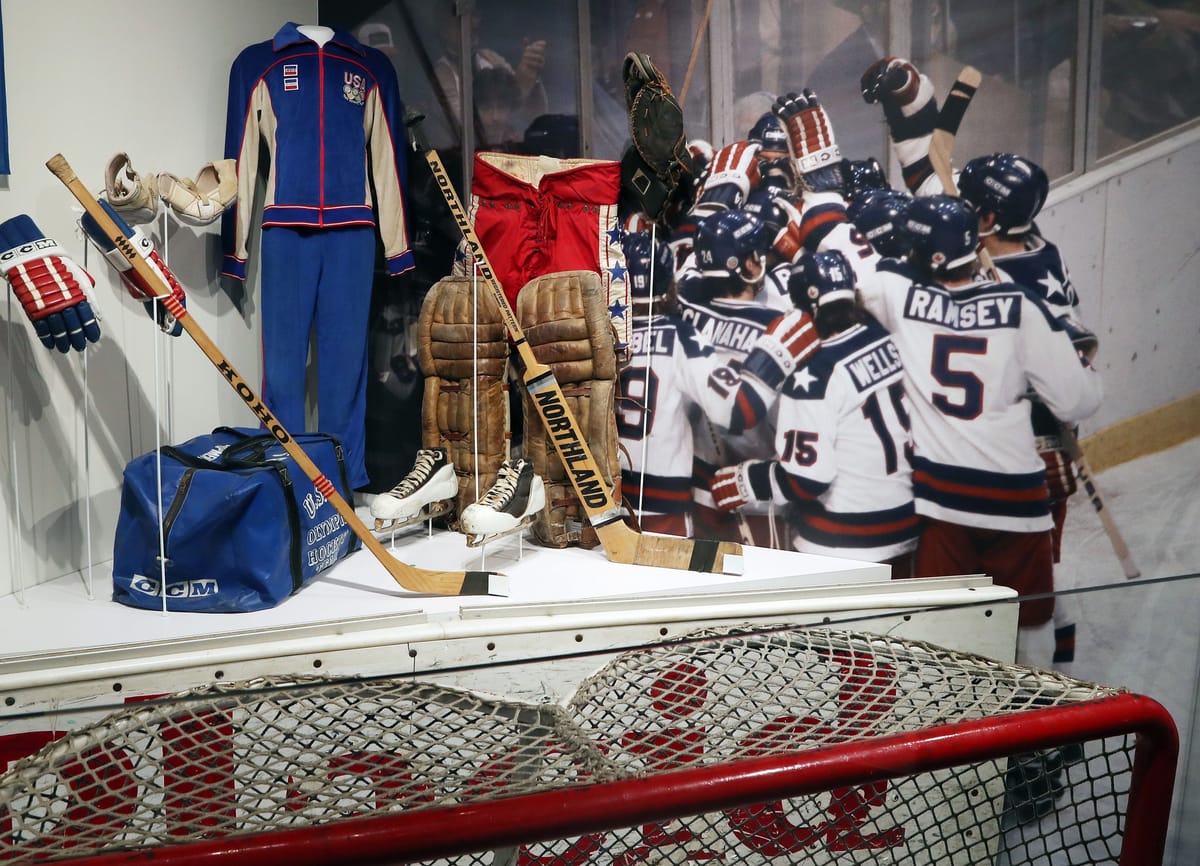
Tomorrow (Feb. 22) marks 46 years since Herb Brooks and his team of amateur hockey players pulled off one of the greatest upsets in sports history and arguably the greatest moment in American sports history.
It was February 1980 when the U.S. Men’s Olympic Hockey Team came into Lake Placid as enormous underdogs and left it as legends. Brooks never gave up on his goal of seeing his dream of Olympic glory through. And, because of that, USA Hockey and, in a way, the New York Rangers have been changed for the better.
The Story of the Miracle on Ice
It all started in 1960 when Herb Brooks was the last player cut from the U.S. Olympic team that went on to win the country’s first gold medal in ice hockey. Brooks sat on his couch watching his team win gold as his father sat beside him, cracking a joke that they must’ve cut the right guy. Brooks went on to be a legendary college hockey coach at the University of Minnesota, where he led the Golden Gophers to three national championships in 1974, 1976, and 1979.
But the job wasn’t done. Brooks still had dreams of Olympic glory, and would finally get that chance as he was brought on to coach the 1980 Olympic team.
The Olympics then were much different than they are today. You could not compete in them if you were a professional athlete, so anyone who received income for playing their sport—namely, NHL players—were ineligible to play. It wasn’t long after Lake Placid that the rule changed. And ever since the Olympics began to allow professionals to compete in the games, it was clear that there would never be a sporting event of that magnitude ever again. Sure, there was the political side of it, with the games taking place at the height of the Cold War. But so much of the tale that is the Miracle on Ice is made up of events that will never transpire again in they way they did leading up to the winter of 1980.
For starters, Herb Brooks brought an incredibly unorthodox idea to the table in terms of Olympic preparation. After hosting tryouts in the summer of 1979, Brooks quickly decided on 26 names to endure a season's worth of 61 exhibition games to prepare for the Winter Olympics. Those games included exhibition matchups against college teams, different countries’ national teams, all-star teams, NHL teams, and even a final warmup contest against the Soviet Union, where they were blown out 10-3 at Madison Square Garden. Even if the NHL players weren’t in the picture, no other team would ever get that kind of specific preparation leading up the Olympics.
The Miracle on Ice also took place during a time in which USA Hockey was not the powerhouse that it is today. With the 2026 Milan Games being the first Winter Olympics in over a decade where the NHL is participating, the expectation isn't just that Americans would medal, but that they would compete for a gold medal.
That hasn't always been the case, and it certainly was not in 1980. The Soviet Union were the clear favorites when it came to hockey, with Canada, Sweden, Finland, and Czechoslovakia (now Czechia and Slovakia) also being in the conversation. At best, the Americans were expected to be competitive at Lake Placid, but the thought of coming out of it with any medal—let alone gold—was a long shot.
In order to achieve his goal and pull off the impossible, Brooks came into the Olympics with a plan. He wasn’t going to be a friend to his players. He was going to be their coach and, in a way, their collective enemy. He didn’t necessarily take the best players. He picked the ones he felt could be a part of something larger than themselves—players who could fit a certain style, cohere as a team, and who could be tested to the furthest extent of their ability.
Brooks was also a student of the game, and for as much as he viewed the Soviets as the enemy, he had a great respect for them, specifically the way they played the game. He would study their tapes, sneak in to their practices, and watch them as often as he could to learn from them. Whether it was how they played the game on the ice, how they trained and conditioned off the ice, Brooks knew them better than anybody, which made him the best man for the job.
In the 61 games the U.S. team played leading up to the Lake Placid Olympics, Herb Brooks' squad went 41-17-3. With a roster of 26 to start, Brooks had to make six cuts prior to opening ceremonies—eight if you include the two players who were invited to tryout very late in the process. The six players cut were Jack Hughes, Gary Ross, Les Auge, Dave Delich, Ralph Cox and goaltender Bruce Horsch. University of Minnesota standouts Tim Harrer and Aaron Broten were also given a look in a handful of games.
The final roster was:
Dave Silk - Mark Johnson - Rob McClanahan
Buzz Schneider - Mark Pavelich - John Harrington
Phil Verchota - Neal Broten - Eric Strobel
Mike Eruzione - Mark Wells - Steve Christoff
Mike Ramsey - Ken Morrow
Bob Suter - Jack O'Callahan
Bill Baker - Dave Christian
Jim Craig
Steve Janaszak
The Americans got off to a rough start, dealing with injuries and struggling to compete with the high-speed Team Sweden. They would pull off a tie in the final minutes of the third period and followed that up with a huge 7-3 upset against Czechoslovakia. That gave them the necessary momentum to come up with wins against Norway, Romania, and West Germany to land them a spot in the medal round against the Soviet Union.
What many people often don't realize is the Miracle on Ice was USA vs. Soviet Union in the semifinal. After the Americans won that game, they still had to take on Finland in the gold medal game. Not to mention, given how the tournament as a whole played out, the Americans needed to beat Finland to not only win gold, but to win any medal at all.
The United States trailed in every game of the Olympics that year, including in the gold medal game, where they pulled off yet another comeback to beat the Finns 4-2.
The Impact on USA Hockey
According to USAhockey.com, membership in the 2024-25 season was up to 577,864 players. In 1990-91, which was the earliest data that was available following 1980, there were only 195,125 players enrolled. In 1994-95 enrollment was up to 313,505, and that number would reach north of 400,000 in the 2001-02 season. By 2021, that number was surpassing 500,000. Hockey as a sport was just not as popular in the United States prior to 1980. Not only were there not as many kids playing back then than there are now, but the sport didn't have as big of a following before 1980.
According to Sound of Hockey, a Seattle Kraken website that has done a ton of research on the growth of hockey in the United States (mainly for expansion reasons), United States participation in the NHL has skyrocketed over the years since 1980. Beginning at roughly 11 percent and progressing relatively consistently ever since, that number was much closer to 30 percent as of last season. (I highly recommend checking out their full article to gain a deeper insight on some of that data.)
While there could be many factors to its growth, it's hard not to credit the Miracle on Ice (and Disney's cinematic retelling of the story) as a huge part of why USA Hockey and American representation in the NHL has grown so much in the last 40+ years. If you look at any of the aforementioned data, one of the biggest jumps in growth for USA Hockey and the NHL comes around the mid-90s'. That was roughly 15 years after the 1980 Olympics, so figure that anyone who was around the age of five when USA won gold was now a late teen or in their early twenties. Most of those were surely just registered players in USA Hockey, but the best of the best were a part of the rise in competition at the NCAA level, as well as the NHL.
As someone who was born in the mid-90s', the movie version of the story hit theaters in 2004 during extremely formative stages of my childhood. I became obsessed with the story, to the point where I could tell you every player on Team USA, the Soviet team, their stats, their backgrounds, their spot in the lineup—way more than anyone who was not alive in 1980 should know.
I was far from the only young hockey player who was inspired by that team and grew up knowing every line in the movie. I would watch it before every big game or tournament, my friends and I would watch it every year before tryouts, and if you played hockey throughout the last thirty years, you probably had this movie on constant loop.
And that's a big part of why there's such a huge spike in numbers in the mid-late 2010s'.
Its impact isn't just specific to hockey players. There are no shortage of Americans who either never watched hockey prior to 1980 and got into the sport because of that, or folks who can count on one hand the amount of full hockey games they've watched with that handful of games all coming during the 1980 Olympics. Without Herb Brooks' group of ordinary American kids doing the unthinkable and taking down one of the greatest hockey teams to ever exist, the sport in this country surely would not be what it is today.
The Impact on the New York Rangers
The rise in USA hockey over the years had a direct impact on the New York Rangers. Four members of the 1994 Stanley Cup championship team were American-born players—most notably, Mike Richter and Conn Smythe Trophy winner Brian Leetch.
In a 2020 interview piece by Tom Gulitti for NHL.com, Leetch was asked about the personal impact the Miracle on Ice had on him.
"At the time, it was just as important to me to be in a hotel room with my youth hockey team all watching it on TV. That was fun as a 12-year-old and an 11-year-old for us to be together and jumping up and down on the beds when the U.S. scored, so that was more in the moment. I would say within the next two, three, four years as you go through your upper levels of schooling and you learn a little bit more about the world around you and politics and everything that goes on and what that team went through, it became more and more important. And as my career went along and the Olympics actually became a reality on my radar, it all really became a big deal and every one of those players became a big deal.
"Any time (1980 Olympians) Mike Eruzione or Kenny Morrow or somebody was in the area they would stop by and say hi to the teams, whether we were on the junior national team or when we were training for the Olympics, it was always a big deal."
The Rangers have had a number of incredible hockey talent come and go over the years, many of whom were American-born players. The lasting impact the Miracle on Ice and the rise of USA Hockey had on the Rangers is evident, but there was also a direct impact in the immediate years that followed. Six members of that Miracle on Ice team went on to make their mark in the New York Rangers history books—four players and two coaches.
Rob McClanahan
One of the most important members of the 1980 team, Rob McClanahan was a staple on that top line alongside Mark Johnson. A college hockey standout, McClanahan had plenty of success under Herb Brooks at the University of Minnesota and he carried that into the Olympic season. During the 61 game exhibition season the team endured, McClanahan finished second on the team in points with 70. While everyone thinks of Mike Eruzione’s game-winner against the Soviets as the most important goal of that tournament, McClanahan ended up with the gold medal-winning goal, as he made it 3-2 before the Americans tacked on another to beat Finland by a score of 4-2. (It's still insane to think had they not won that game, they wouldn’t have won a medal at all.)
McClanahan was drafted by the Buffalo Sabres 49th overall in 1978, and following the games in Lake Placid went on to play in 23 games with the Sabres, 10 of which came in the playoffs. The following season, McClanahan was moved to the Hartford Whalers, and in 1982 he joined the Rangers where he would play the most games of his NHL career. McClanahan spent parts of three seasons in New York and had a career high season in 1983 with 48 points in 78 games. McClanahan also had two goals and five assists in twelve playoff games with the Rangers. The following season would be his last in the NHL, finishing with a career tally of 38 goals and 63 assists for 101 points in 224 games played.
Dave Silk
Most commonly the third member of that McClanahan-Johnson line, Dave Silk was drafted 48th overall in the 1978 draft by the Rangers, where he spent more than half of his NHL career. Silk was one of the Boston University guys who made up that storied Olympic roster Appearing in 56 of the preseason games with the Olympic team, Silk had a total of 12 goal sand 36 assists for 48 points leading up to Lake Placid. He would pick up two goals and three assists during the tournament, including the secondary and primary assist on both of Mark Johnson’s goals that helped the Americans pull off the 4-3 miracle win over the Soviets.
Similarly to McClanahan, Silk went right to the NHL following the end of the Olympics where he appeared in just two games with the Rangers that season. He would remain in New York for the next three seasons, playing in a total of 141 games during that time. Silk would end his NHL career with 54 goals and 59 assists for 113 points in 249 games played.
Bill Baker
Speaking of important goals and points in the 1980 Olympics, there’s a good chance the Americans wouldn’t have gotten to the medal rounds had it not been for Bill Baker’s slap shot that tied the first game of the Olympics against Sweden. Another University of Minnesota standout, Baker was an important defenseman for Team USA, playing in 60 of their preseason games and solidifying himself on that third defensive pairing alongside Dave Christian. Baker had just the one goal in the Olympics, but he had 30 points in those 60 games leading up to it.
Baker played in a total of 143 NHL games as he climbed his way up the ranks, beginning in the AHL following the end of the games in Lake Placid. He split his first two seasons in the NHL between the Montreal Canadiens, Colorado Rockies, and St. Louis Blues before spending the entirety of the 1982-83 season with the New York Rangers. Baker appeared in 70 games that season and registered four goals and 14 assists for 18 points, as well as skating in two postseason games. Baker was drafted 54th overall by Montreal in 1976, as well as 49th overall in 1976 by the New England Whalers in the WHA.
Fun fact about Baker: He was the return to the St. Louis Blues in a trade that sent long-time member of the Rangers broadcast team Joe Micheletti to the Colorado Rockets to acquire the 1980 Miracle man.
Mark Pavelich
A staple on the “Conehead” line for Herb Brooks, Mark Pavelich was one of two University of Minnesota-Duluth players who made the 1980 team. He finished fifth on the team in points throughout the preseason, and was a point-per-game player in Lake Placid with a goal and six assists. Pavelich had a pair of assists in the Miracle game, including the primary assist on Mike Eruzione’s game-winning goal in the third period.
Arguably the most impactful Ranger from the Miracle team, Mark Pavelich was undrafted but played five seasons with the Blueshirts. Pavelich is a frequent flier for the Cadillac Trivia Question as he most notably holds the Rangers record for points in a season as a rookie and, along with Mika Zibanejad, had a five goal outing under his belt. Pavelich played a total of 355 games in the NHL, 341 of which were with the Rangers, where he scored all but 11 of his 329 career points.
Herb Brooks and Craig Patrick
Both members of the Miracle team coaching staff went on to have coaching and management roles with the Rangers. From 1981-1985, Herb Brooks coached the Rangers and became the first American-born coach in franchise history to win 100 games.
Craig Patrick, who was Brooks’ assistant coach for the 1980 Olympic team, immediately joined the Rangers organization after Lake Placid as Director of Operations before becoming the youngest general manager in franchise history in 1981. When Brooks was fired as Rangers head coach in January of 1985, Patrick took over for the remainder of the season. Patrick went on to have more success with the Pittsburgh Penguins as he became their GM in 1989. They would win two Stanley Cups as Patrick would draft Jaromir Jagr and pull off some remarkable trades that brought notable names like Ulf Samuelsson, Ron Francis, and Joe Mullen to Pittsburgh.
Miracle: The Boys Of 80
As I conclude, I wanted to make mention of the latest telling of this story in the form of a new Netflix documentary that was recently released. If you haven't seen it yet, I urge you to find some time this weekend or in the near future to give it a watch ,because they really did an extraordinary job with it.
As I mentioned before, I know way more about this team and the whole story than anyone who wasn't around for it ought to, and there were still some things mentioned in this documentary that I hadn't known prior to seeing it. It really puts into perspective why Herb Brooks pushed those kids as much as he did, and offers really touching insight into the affect it had on everyone involved in the years to follow.
Sadly, four members of the 1980 Miracle on Ice family are no longer with us. Herb Brooks tragically passed away in a single-car accident in 2003, and in recent years Mark Pavelich, Bob Suter, and Mark Wells have passed, as well. As time goes on, it can be easy to overlook the impact this history had on shaping the present, and the Miracle on Ice is a perfect example of that. It's a story that can never be told too much and one that will truly stand the test of time and live on forever.
With that, I'll leave you all with two of my favorite Herb Brooks quotes about dreams
You know, Willie Wonka said it best: we are the makers of dreams, the dreamers of dreams.
We should be dreaming. We grew up as kids having dreams, but now we're too sophisticated as adults, as a nation. We stopped dreaming. We should always have dreams.