2026 Rangers Report Card: Scott Morrow
Four of our writers felt they didn't have enough to even grade him. That tells you most of what you need to know about Scott Morrow's first year on Broadway.

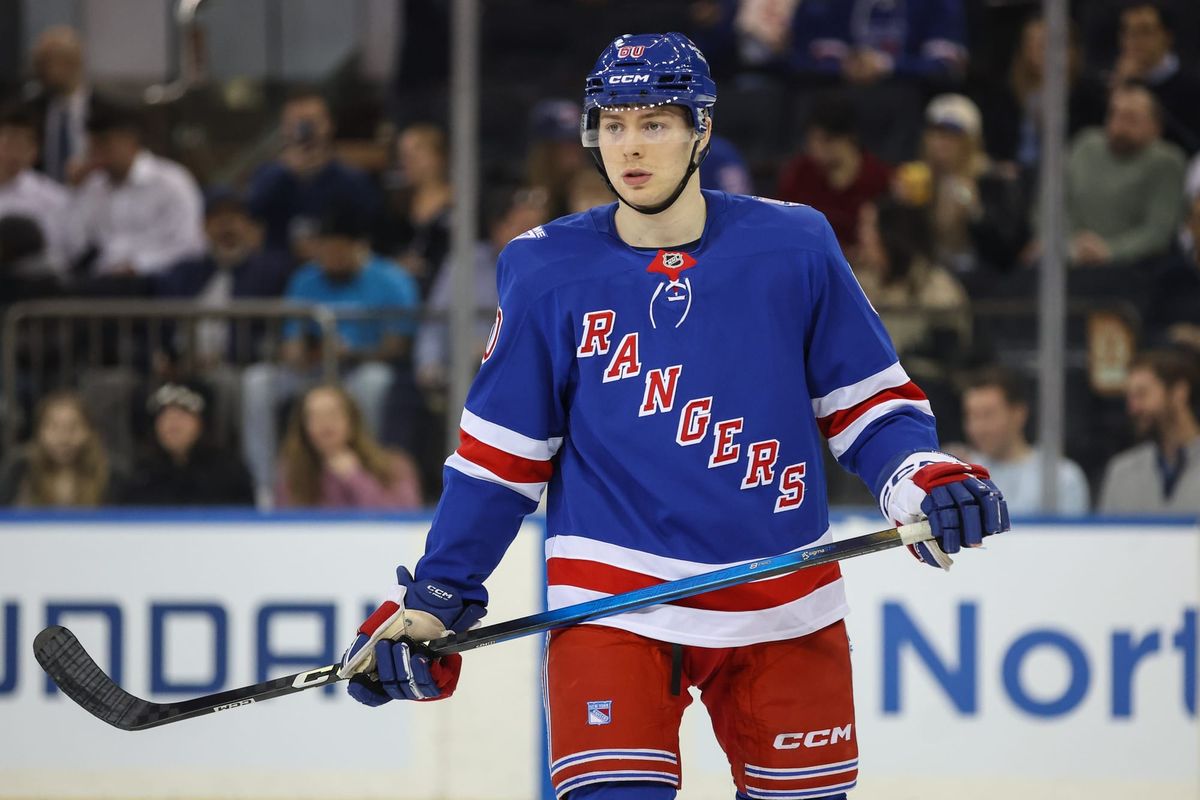
This article is part of an ongoing series of Rangers Report Cards, grading the performance of each member of the 2025-26 New York Rangers. To view more report cards in this series, go here.
To read the Season Preview for Scott Morrow, go here.
Expectations
When setting expectations for Scott Morrow in my season preview piece, I mentioned that there were likely two different sets of expectations. There were the ones he held for himself, which surely involved forcing his way onto the opening night roster and finding a way to spend a full season, or close to it, in the NHL. Remember, this is a player who despite only appearing in 14 NHL games last season, suited up in five playoff games with the Carolina Hurricanes and didn’t look out of place there. The potential for him taking those next steps towards becoming an NHL regular was, by all accounts, there for the taking.
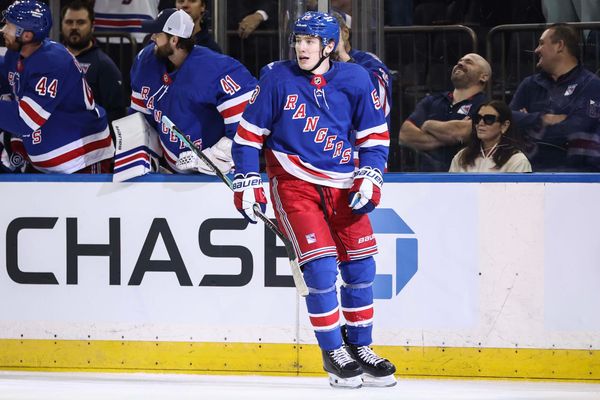
The expectations from the New York Rangers, on the other hand, likely went according to plan in the sense that he got the chance to spend some time with the big club, but continued to develop his game in the AHL. While he didn’t make the opening night roster or even get an extended tryout, he did get that initial call up early enough in the season. He made his Rangers debut in mid-November and by the end of the month, he was averaging roughly 15 minutes of ice time per night.
Given that Scott Morrow was the big prospect that came to the New York Rangers as part of the K’Andre Miller trade, the expectation was for Morrow to be the top defenseman in Hartford, act as the primary call-up option on defense, and show signs that he can be a part of their blue line down the road.
With his first full season with the Rangers organization under his belt, his road to a full time NHL role is more uncertain than it was this time last year.
Performance
NHL: 29 GP | 0 G | 6 A | 6 PTS | -5 | 24 SOG | 4 PIM
AHL: 34 GP | 5 G | 14 A | 19 PTS | -16 | 69 PIM
In hindsight, it almost sounds surprising to say that Morrow played in roughly 35 percent of the season. At face value, six points in 29 games isn’t particularly promising, especially for a former 40th overall draft pick who is regarded as a prominent offensive-defenseman.
As mentioned, Morrow made his Rangers debut in the middle of November in what became 2-1 loss to the Detroit Red Wings. He remained with the team and picked up his first point as a Ranger in a 6-2 win over the Boston Bruins, and by December he was about as close to an NHL regular as you can be as a 23-year-old. Throughout December and January, Morrow played in all but five games with the Rangers but by the end of the month, he was fizzling out of the Rangers’ lineup.
Now, Morrow’s place in the lineup was a direct result of Adam Fox missing an extended amount of time with injury. Which makes sense given that they are both more offensive-minded defenseman with a smaller build who shoot right and play the game with a high level of skill. That extended opportunity should have been the chance for Morrow to prove himself to the Rangers. But as things turned out, it didn’t exactly go according to plan.
In fairness to Morrow, he wasn’t necessarily deployed in the most fitting situations. When Fox went down with injury, there’s no question that Morrow should have been given the opportunity to quarterback the power play and see top-four minutes playing alongside a veteran defensive-defenseman in Vladislav Gavrikov. Instead, he was glued to the bottom pair, Gavrikov was put in Fox’s place on the power play, and Morrow spent most of his time playing alongside Matthew Robertson. When he wasn’t with Robertson, he was paired with either Carson Soucy or Urho Vaakanainen.
In fairness to the Rangers, Mike Sullivan and the rest of the coaching staff did give Morrow that extended opportunity in the first place and, as we learned with some of the younger forwards (Othmann, Berard, Sykora, Chemlar), it’s not always about being put in a position to succeed. It’s about finding a way to succeed despite all other factors. Morrow also got the chance to be that top defenseman in Hartford and while their season was their own type of disaster, he only had 19 points in 34 games to show for.
From the fan perspective, it may have felt like he didn’t get enough of a look, but it certainly seems like the coaching staff saw enough to make an initial decision on him.
"... it’s unclear whether #NYR would be willing to trust either Iorio or Morrow — both of whom will be RFAs seeking new contracts — in the third spot. Chances are, competition will be brought in via trade or free agency." https://t.co/D5AyTdxxHZ
— Phil Kocher (@PhilKocher) April 27, 2026
Grades
Author Grade: C-
Banter Consensus: D+ (Note: Four Banter writers graded him "Incomplete")
Final Evaluation
Morrow will turn 24 in November, which means the time for him to establish himself as a full time NHL defenseman is rapidly approaching. As currently constructed, he should be more than capable of earning a job out of camp and establishing himself as a third pair defenseman who can quarterback the second power play unit, at the very least.
If the Rangers decide to move on from Braden Schneider and/or Will Borgen, it becomes all the more reason for Morrow to make that jump. But we know how the Rangers operate. They’re going to consider signing any available names, particularly Mario Ferraro or Jamie Oleksiak. They’re trying to retool, not rebuild, which would indicate that they’d prefer an established professional over a kid who hasn’t fully impressed them yet.
Morrow is a restricted free agent this summer which means the Rangers will surely supply him with his qualifying offer ($874,125). His entry-level AAV rang in at $916,667, meaning he will likely look to get some sort of a pay raise. Either way, I can't imagine Morrow is interested in signing anything longer than a one-year extension, because if next year is anything like how this season played out, he's going to want a change of scenery to avoid turning into the second coming of Zac Jones.